The Culture Activation System routes engagement signals straight to the person who needs to act, so feedback turns into a specific play instead of a report nobody opens.
Culture Activation System
The Problem Every People Leader Knows
You collect feedback. Your managers get overwhelmed. Your employees stop participating because they are left out of the process or nothing visibly changes. The pattern is predictable.
When feedback sits in a dashboard instead of becoming manager action, trust breaks.
How the System Works
Traditional Systems Measure Culture. R² Activates It.
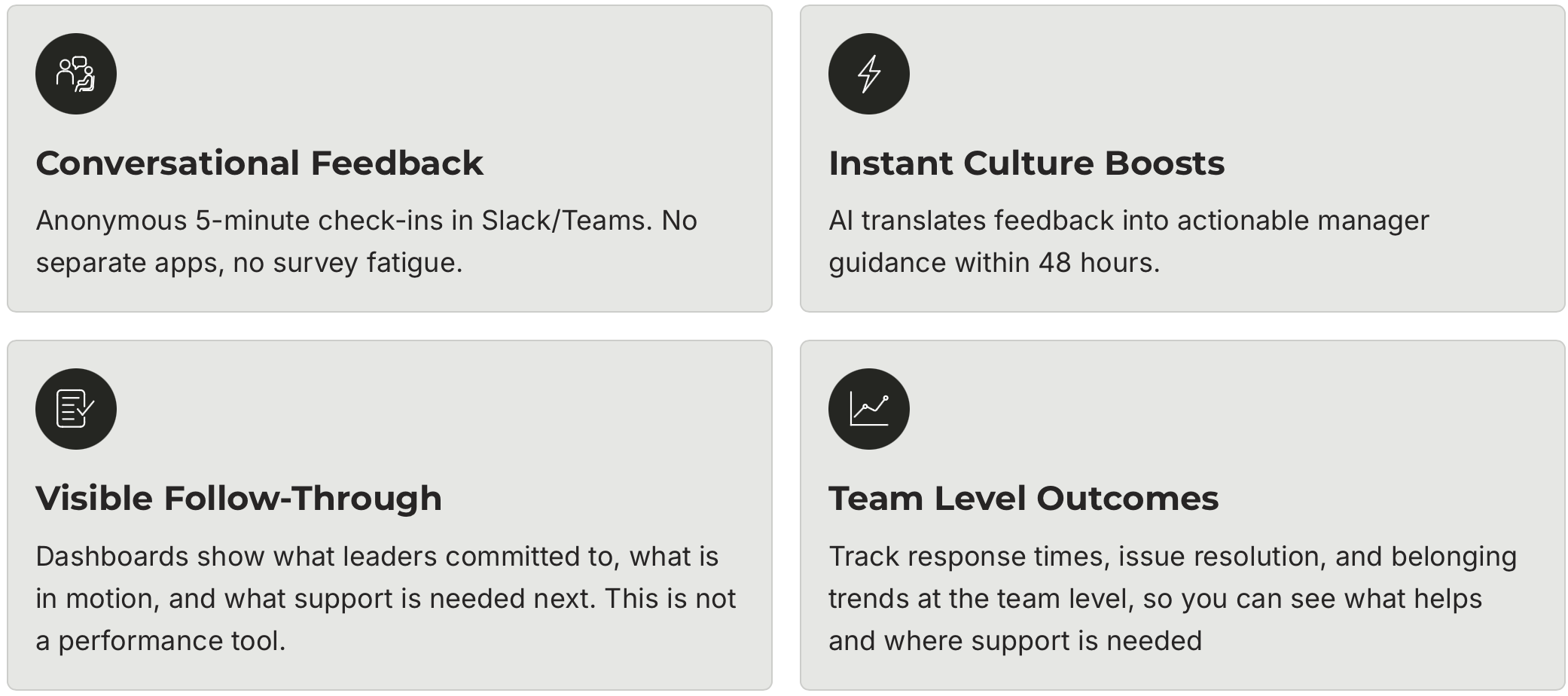
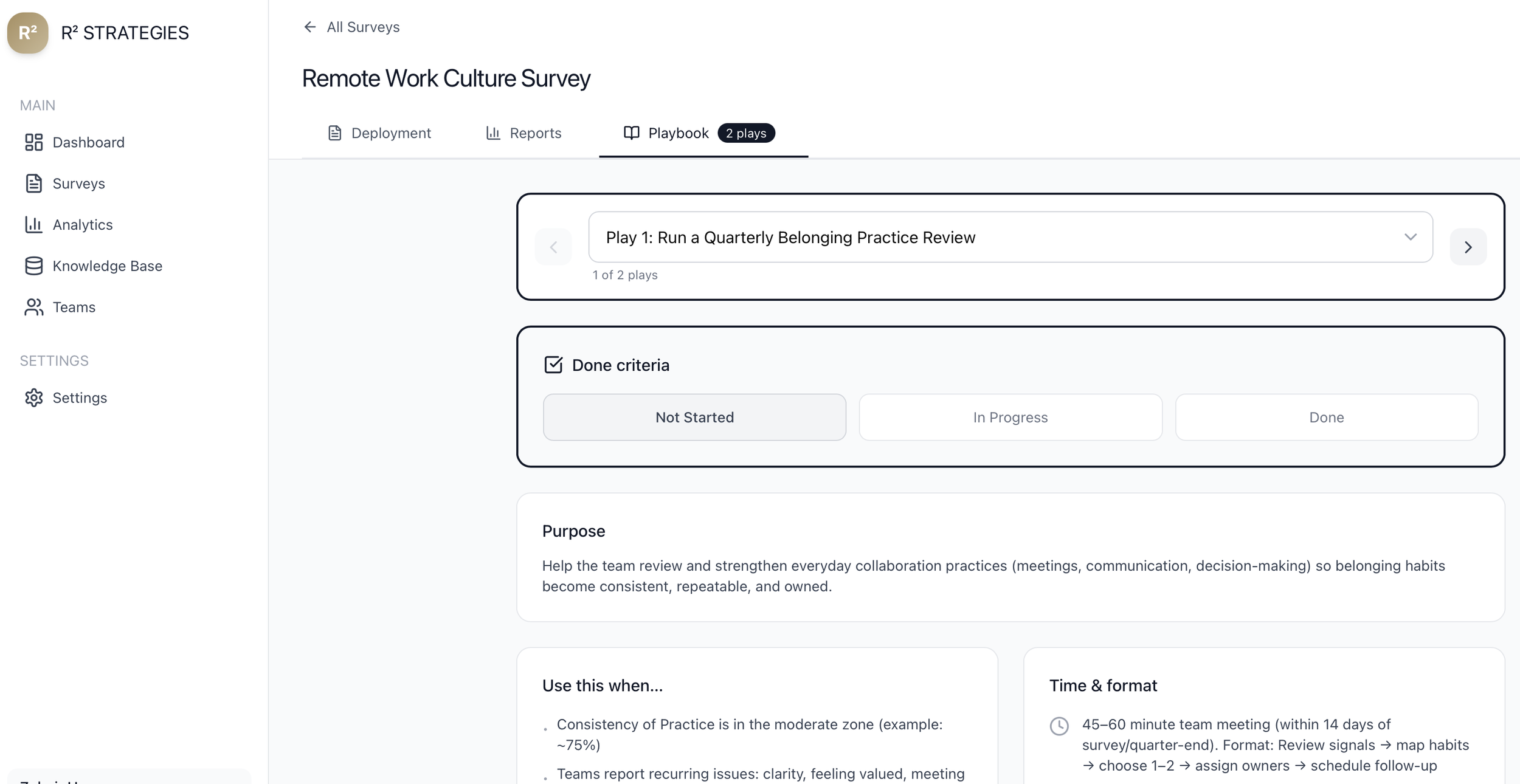
Micro-Playbooks Routed to the Right Level
Every play matches the signal to who needs to act, a manager running a 1:1, a team building shared practice, or a leader setting scorecards. Not generic advice. Concrete next steps for whoever's closest to the problem.
Workflow-Native Lives in Slack or Teams.
No new logins, no training required. Feedback feels lightweight because it happens where people already work.
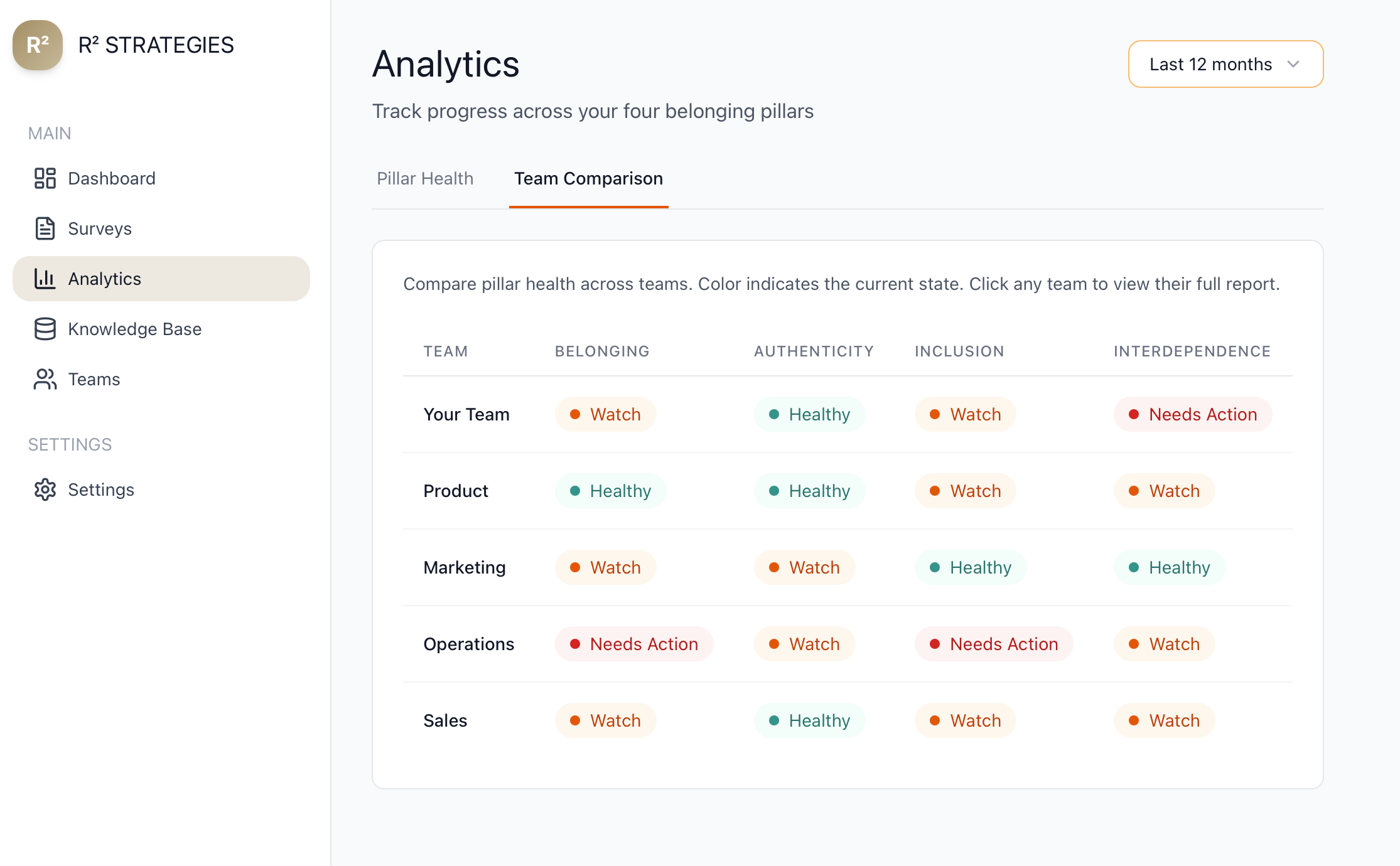
Follow-Through Built In Dashboards
Show team-level actions and what is in motion. Leaders see where to remove blockers. HR knows where managers need support. We track actions, not people. We do not score managers or rank teams.
Frequently Asked Questions
-
Traditional surveys collect data once or twice a year and leave managers to figure it out. R² turns feedback into specific manager actions within 14 days, with visible follow-through so employees see what changed.
-
They get a short Culture Boost: what the issue is, why it matters, and 3-4 actions they can take right now. No guesswork. Just plays with scripts and timelines.
-
That's the best experience. R² is designed to live where people already work so feedback feels lightweight and immediate. If chat is restricted, we can use an email fallback.
-
Faster manager response time, higher engagement, and improvements in "my voice matters" scores — because people see action.
-
No. R² sits as the activation layer on top of what you have. It makes your existing surveys and dashboards result in action. Think of it as the system that closes the loop faster.
-
Yes. We collect feedback in a way that protects employee identity and surface it to managers as themes and actions. The goal is behavior change, not "who said it."